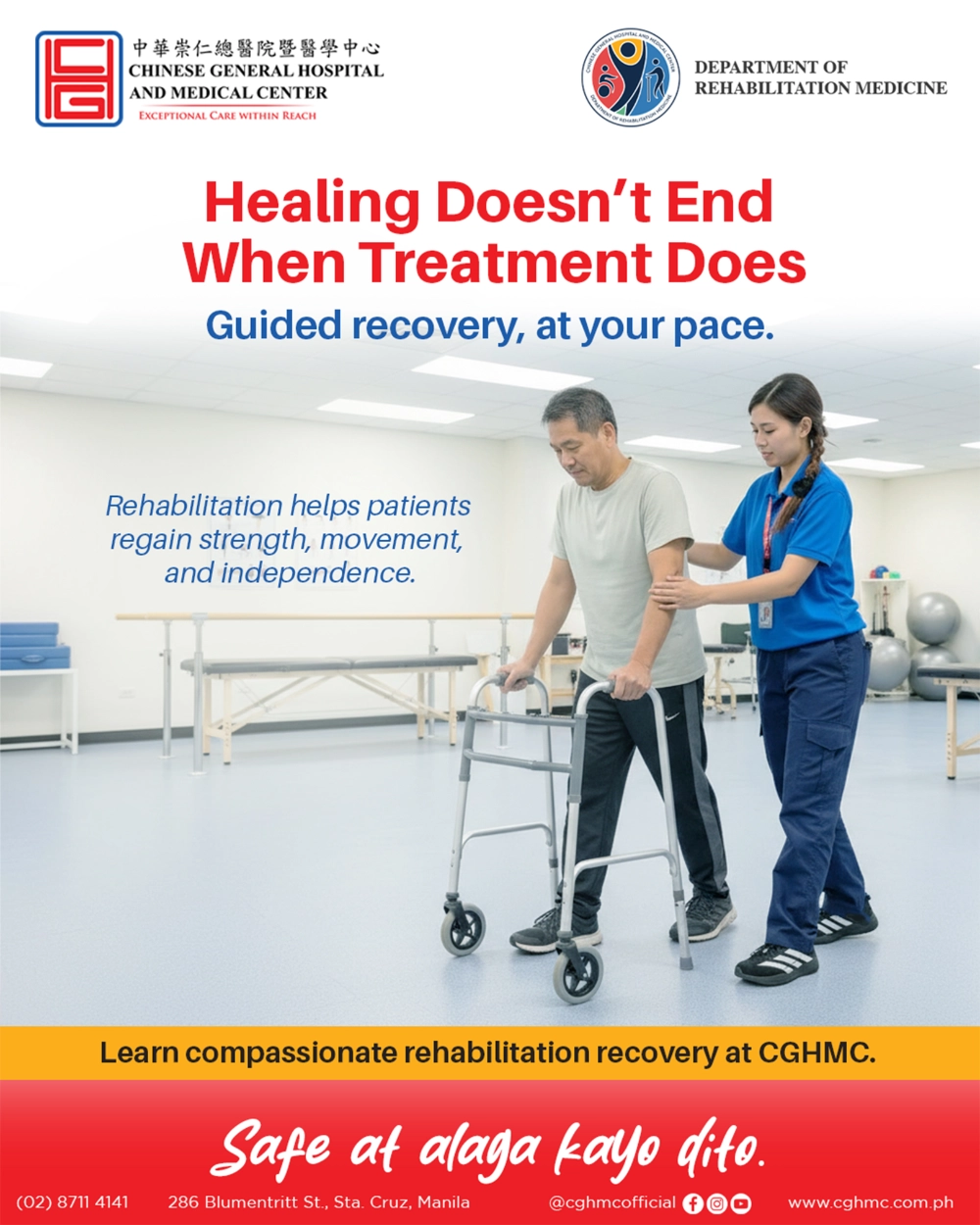
Medical treatment does not end when a procedure is completed or when a hospital stay is over.
For many patients, true healing begins after the acute phase — during recovery.
Rehabilitation medicine focuses on restoring strength, mobility, independence, and daily function after illness, injury, or surgery. It is not optional or secondary care. It is an essential part of comprehensive treatment.
At Chinese General Hospital and Medical Center (CGHMC), rehabilitation medicine is structured to help patients regain function safely, steadily, and confidently.
What Is Rehabilitation Medicine?
Rehabilitation medicine, also known as physiatry, is a medical specialty focused on improving functional ability and quality of life.
It addresses physical limitations caused by:
- Stroke
- Brain injury
- Spinal cord injury
- Orthopedic conditions
- Cardiac events
- Chronic neurological conditions
- Prolonged hospitalization
- Cancer treatment
The goal is not simply tissue-healing — it is restoring the ability to move, work, speak, swallow, and perform daily tasks.
Why Recovery Should Not Be Delayed
After illness or injury, the body naturally compensates for weakness.
Without guided rehabilitation:
- Muscles weaken further
- Joints stiffen
- Balance declines
- Endurance drops
- Risk of fall increases
Early physical rehabilitation after illness prevents long-term disability and promotes faster reintegration into daily life.
Rehabilitation works best when started promptly and tailored to the patient’s condition.
Who Needs Rehabilitation Medicine?
Many patients benefit from rehabilitation services, including:
Stroke Patients
Stroke rehabilitation is one of the most critical conditions that needs rehabilitation with great potential for faster recovery.
Patients may experience:
- Weakness on one side of the body
- Speech difficulty
- Swallowing problems
- Balance instability
Structured therapy improves motor recovery, speech and swallowing function, and reduces long-term disability.
Post-Surgical Patients
After orthopedic or abdominal surgery, rehabilitation helps:
- Restore joint mobility
- Strengthen muscles
- Improve posture
- Prevent complications
Post-surgery rehabilitation reduces stiffness and speeds return to routine activities.
Cardiac Patients
After heart procedures or cardiac events, supervised rehabilitation improves:
- Endurance
- Cardiovascular efficiency
- Confidence in movement
Rehabilitation also reduces the risk of future cardiac episodes and prevents deconditioning.
Neurological Conditions
Patients with Parkinson’s disease, multiple sclerosis, or spinal injuries benefit from structured therapy focused on maintaining independence.
Prolonged Hospitalization
Patients who have spent extended time in intensive care may experience significant muscle loss and weakness.
Rehabilitation supports safe reintegration into daily activities.
What Happens During Rehabilitation?
Rehabilitation medicine is personalized. It typically involves a coordinated team, including:
- Rehabilitation physicians
- Physical therapists
- Occupational therapists
- Speech therapists
- Rehabilitation nurses
Treatment plans may include:
- Strength training
- Balance exercises
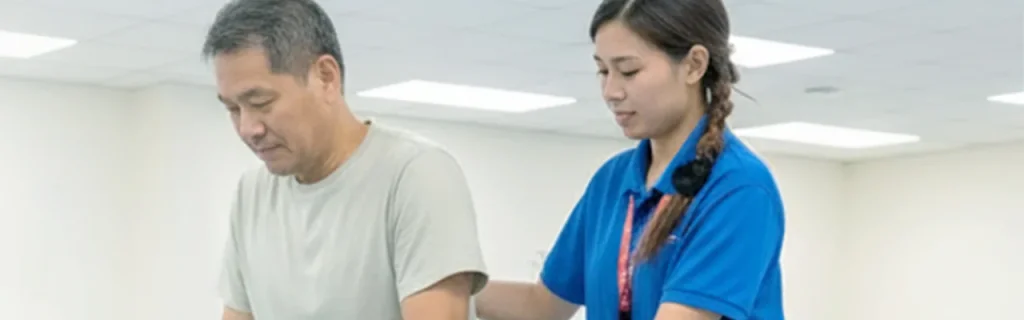
- Gait training
- Range-of-motion therapy
- Fine motor skill exercises
- Swallowing therapy
- Cognitive exercises
Progress is measured regularly and adjusted based on response.
Physical Therapy vs Occupational Therapy
Understanding the difference helps patients know what to expect.
Physical therapy focuses on:
- Walking
- Balance
- Muscle strength
- Joint movement
Occupational therapy focuses on:
- Daily living skills like dressing, grooming, and feeding
- Dressing and grooming
- Writing and hand coordination
- Adaptive strategies for independence
- Swallowing functions
Speech therapy focuses on:
- Communication skills (speech clarity, language, and expression)
- Swallowing and feeding difficulties
- Cognitive-communication (memory, attention, problem-solving)
- Voice and fluency disorders
- Social communication skills
All of these work together to restore overall function.
Regaining Independence Is the Goal
Rehabilitation is not simply exercise. It is structured recovery planning.
The ultimate objectives are:
- Safe mobility
- Reduced fall risk
- Improved coordination and balance
- Increased endurance
- Return to work when possible
- Greater self-sufficiency
- Motor recovery
Recovery is measured not only by medical stability but by functional progress.
Emotional and Psychological Benefits of Rehabilitation
Physical recovery often improves emotional well-being.
When patients regain movement or independence:
- Confidence improves
- Anxiety decreases
- Motivation increases
- Family burden is reduced
Rehabilitation supports both physical and psychological stability.
Why Choose CGHMC for Rehabilitation Medicine in the Philippines?
CGHMC Rehabilitation Medicine provides:
- Individualized treatment plans
- Multidisciplinary coordination with Cardiology, Neurology, Oncology and Surgery services.
- Modern and technologically advanced therapy equipment
- Safe and structured recovery environment
Because CGHMC is a full-service hospital, rehabilitation integrates seamlessly with other specialties.
Recovery does not occur in isolation. It is connected to overall care.
Rehabilitation Is Not a Sign of Weakness
Some patients delay rehabilitation because they believe they should “recover naturally.”
In reality, guided rehabilitation accelerates healing and reduces complications.
Seeking rehabilitation is not an indication of severity — it is a proactive step toward full recovery.
When Should You Consider Rehabilitation?
You should consult rehabilitation medicine if you:
- Experience weakness after an illness
- Have difficulty walking or balancing
- Feel limited after surgery
- Notice reduced endurance
- Have persistent joint stiffness
- Are recovering from stroke
Early intervention leads to better outcomes.
Recovery Is Part of the Treatment Plan
Treatment addresses disease. Rehabilitation restores function. One supports survival. The other supports quality of life. Comprehensive care includes both.
Support Recovery with CGHMC Rehabilitation Medicine
If you or a loved one is recovering from illness, injury, or surgery:
Support recovery with CGHMC Rehabilitation Medicine.
Call (02) 8711 4141 to inquire about rehabilitation services.
Healing does not end at discharge. It continues with structured support.
Safe at Alaga Kayo Dito.