You feel fine. You go about your day. Nothing seems wrong.
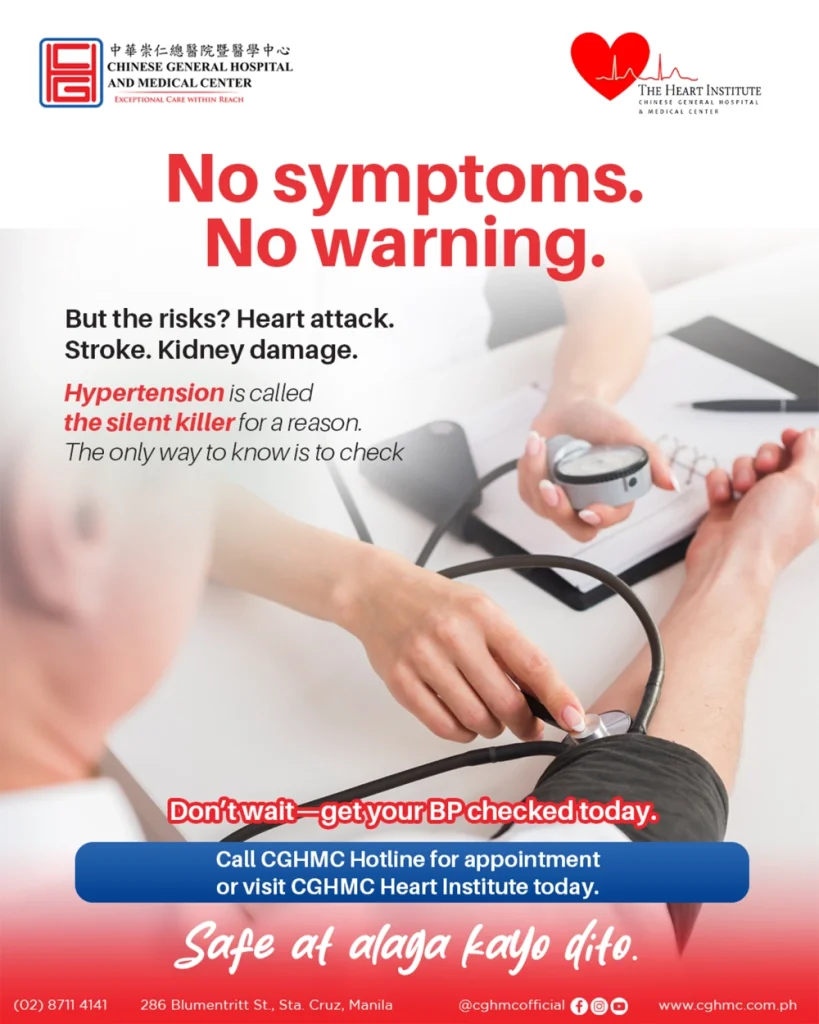
But high blood pressure—also known as hypertension—often develops without warning. It quietly affects millions of Filipinos, increasing the risk of heart disease, stroke, and other serious complications.
In the Philippines, hypertension remains one of the leading causes of death, yet many individuals are unaware they have it.
This is what makes it dangerous—not what you feel, but what you don’t.
Understanding the signs, risks, and the right time to get checked can make the difference between early intervention and life-threatening complications.
What Is Hypertension?
Hypertension is a condition where the force of blood against the walls of your arteries remains consistently too high.
Over time, this increased pressure damages blood vessels and vital organs such as the heart, brain, and kidneys.
Blood pressure is measured using two numbers:
- Systolic pressure (top number): pressure when the heart beats
- Diastolic pressure (bottom number): pressure when the heart rests
A reading of 130/80 mmHg or higher is generally considered elevated and may require monitoring or treatment.
Why Hypertension Is a Major Concern in the Philippines
Hypertension is often called the “silent killer”—and for good reason.
In the Philippines:
- Many individuals remain undiagnosed
- Lifestyle factors such as high-sodium diets, stress, and lack of exercise contribute to rising cases
- Complications are often discovered only after serious events like stroke or heart attack
Because symptoms are rarely noticeable, people may live with hypertension for years without realizing it—until damage has already occurred.
Common Risk Factors
While anyone can develop hypertension, certain factors increase your risk:
- Unhealthy diet (high salt, processed foods)
- Lack of physical activity
- Smoking and alcohol consumption
- Chronic stress
- Family history of hypertension
- Obesity or being overweight
- Aging (risk increases with age)
Understanding these risk factors is the first step toward prevention and early intervention.
Symptoms: Why You May Not Notice Anything
One of the biggest challenges with hypertension is that it often has no symptoms at all.
However, in more advanced or severe cases, some people may experience:
- Headaches
- Dizziness
- Blurred vision
- Chest pain
- Shortness of breath
These symptoms usually appear only when blood pressure is dangerously high.
This is why relying on how you feel is not enough. Regular monitoring is essential—even if you feel completely healthy.
Health Risks of Untreated Hypertension
When left unmanaged, hypertension can lead to serious and life-threatening conditions:
- Heart Disease
High blood pressure forces the heart to work harder, increasing the risk of:
- Heart attack
- Heart failure
- Stroke
Damaged blood vessels in the brain can lead to blockages or ruptures, causing stroke.
- Kidney Damage
The kidneys rely on healthy blood vessels to function. Hypertension can impair their ability to filter waste effectively.
- Vision Problems
High blood pressure can damage the blood vessels in the eyes, leading to vision loss over time.
- Metabolic and Vascular Complications
Hypertension is often linked to other conditions such as diabetes and cholesterol problems, increasing overall health risks.
When Should You Get Checked?
Since hypertension may not cause symptoms, screening is the only way to detect it early.
You should consider getting your blood pressure checked if you:
- Are 30 years old and above
- Have a family history of hypertension or heart disease
- Experience stressful lifestyle or work conditions
- Have other risk factors such as obesity or smoking
- Have not had a check-up in the past year
Even younger individuals should consider screening if risk factors are present.
The Importance of Regular Monitoring
One reading is not enough to confirm hypertension.
Doctors often recommend:
- Multiple readings over time
- Monitoring trends rather than isolated results
- Lifestyle assessment alongside blood pressure readings
Regular monitoring helps detect changes early and allows timely intervention before complications develop.
Managing and Preventing Hypertension
The good news is that hypertension can be managed—and often prevented—with the right approach.
Lifestyle Changes
- Reduce salt intake
- Eat a balanced diet (fruits, vegetables, whole foods)
- Exercise regularly (at least 30 minutes most days)
- Maintain a healthy weight
- Avoid smoking
- Limit alcohol consumption
Medical Management
For some individuals, lifestyle changes may not be enough.
Doctors may prescribe medication to:
- Lower blood pressure
- Protect vital organs
- Reduce long-term risk
Treatment plans are always tailored to each patient’s condition and risk profile.
Why Early Detection Matters
The earlier hypertension is detected, the easier it is to manage.
Early detection allows:
- Less aggressive treatment
- Prevention of complications
- Better long-term outcomes
At Chinese General Hospital and Medical Center (CGHMC), screening and early detection are part of a proactive approach to heart health—ensuring patients receive timely and appropriate care.
Hypertension and Your Daily Life
Living with hypertension does not mean you cannot lead a normal life.
With proper management:
- Blood pressure can be controlled
- Risks can be significantly reduced
- Quality of life can be maintained
The key is consistency—monitoring regularly, following medical advice, and making sustainable lifestyle changes.
A Simple Check Could Change Everything
Ask yourself:
- When was the last time I had my blood pressure checked?
- Do I have any risk factors for hypertension?
- Am I relying on how I feel instead of actual measurements?
If you are unsure about any of these, it may be time to take action.
Because when it comes to hypertension, feeling fine does not always mean being healthy.
At Chinese General Hospital and Medical Center (CGHMC), early detection and preventive care are at the core of heart health. With access to comprehensive screening, experienced specialists, and advanced diagnostic tools, patients are supported every step of the way—from detection to long-term management.
A simple check today can help prevent serious complications tomorrow.