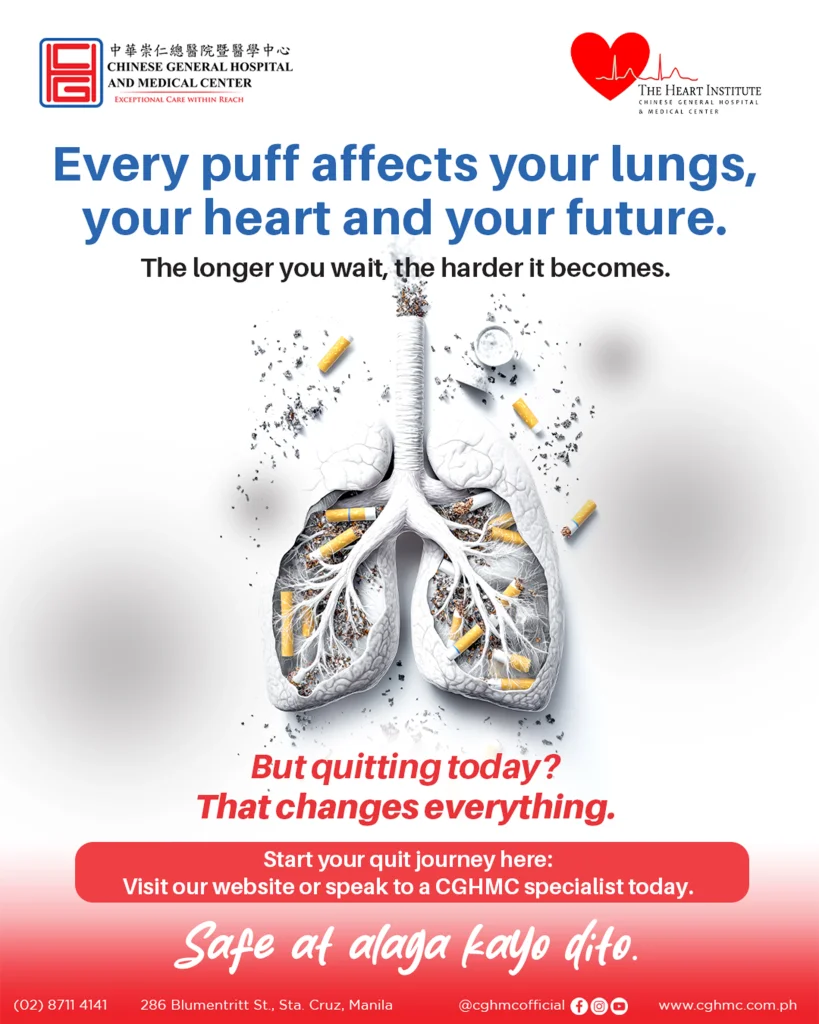
For many, smoking begins as a routine. A break. A way to cope with stress.
But over time, what feels like a small habit can quietly affect nearly every organ in the body.
Smoking is not just a lung issue. It directly impacts the heart, damages blood vessels, and significantly increases the risk of multiple types of cancer.
In the Philippines, smoking remains a major public health concern—contributing to preventable illnesses and long-term complications that often develop silently.
Understanding what smoking does to your body is the first step toward making informed decisions about your health.
How Smoking Affects the Body
Every cigarette introduces thousands of chemicals into the body—many of which are toxic and harmful.
These substances:
- Damage the lining of blood vessels
- Reduce oxygen levels in the blood
- Trigger inflammation
- Interfere with normal cell function
Over time, these effects accumulate, increasing the risk of chronic disease.
The Impact on the Heart
Smoking has a direct and immediate effect on cardiovascular health.
It:
- Raises blood pressure
- Increases heart rate
- Reduces oxygen supply to the heart
- Damages arteries
These changes make the heart work harder and increase the risk of:
- Heart attack
- Coronary artery disease
- Stroke
Even occasional smoking can contribute to long-term heart damage.
The Damage to the Lungs
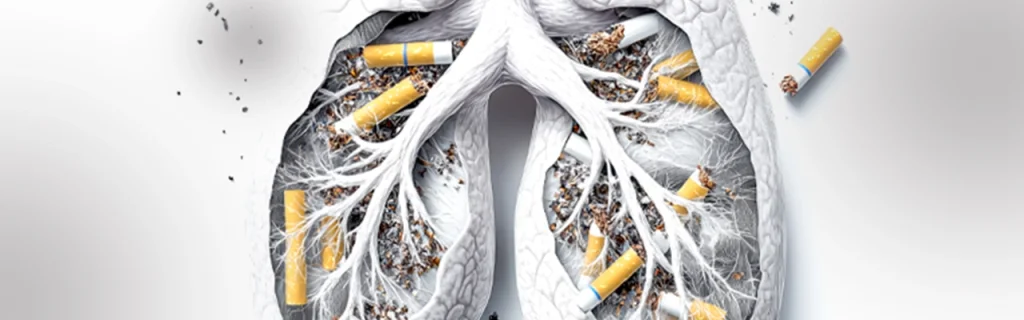
The lungs are one of the most affected organs.
Smoking:
- Irritates and inflames the airways
- Damages lung tissue
- Reduces lung capacity
Over time, this can lead to:
- Chronic Obstructive Pulmonary Disease (COPD)
- Chronic bronchitis
- Emphysema
These conditions can make breathing difficult and significantly affect daily life.
Increased Risk of Cancer
Smoking is one of the leading causes of cancer.
It is strongly linked to:
- Lung cancer
- Throat and laryngeal cancer
- Oral cancer
- Esophageal cancer
- Bladder and kidney cancer
The chemicals in tobacco damage DNA, leading to abnormal cell growth and tumor development.
The risk increases with:
- Duration of smoking
- Number of cigarettes per day
However, even long-term smokers can benefit from quitting—risk begins to decrease over time.
Secondhand Smoke: A Hidden Risk
Smoking does not only affect the person holding the cigarette.
Secondhand smoke exposes others—especially children and family members—to the same harmful chemicals.
This can lead to:
- Respiratory infections
- Asthma complications
- Increased risk of heart disease
- Higher cancer risk over time
Protecting others is another important reason to consider quitting.
Early Warning Signs to Watch For
Smoking-related damage may not be immediately noticeable, but some signs should not be ignored:
- Persistent cough
- Shortness of breath
- Chest discomfort
- Frequent respiratory infections
- Hoarseness or throat irritation
- Unexplained fatigue
These symptoms may indicate underlying conditions that require medical evaluation.
When Should You Get Checked?
If you smoke—or have smoked in the past—it is important to consider regular health checks.
You should consult a doctor if you:
- Have been smoking for several years
- Experience persistent respiratory or cardiovascular symptoms
- Have a family history of heart or lung disease
- Want to assess your current health status
Early screening allows for:
- Detection of potential damage
- Timely intervention
- Better long-term outcomes
Can the Body Recover After Quitting?
The body has a remarkable ability to heal once smoking stops.
Within:
- Days → Oxygen levels improve
- Weeks → Lung function begins to recover
- Months to years → Risk of heart disease and cancer decreases
While some damage may be permanent, quitting smoking significantly improves overall health and reduces future risks.
The Role of Medical Support
Quitting smoking can be challenging, but medical support can make the process more manageable.
Healthcare providers can:
- Assess overall health
- Identify early signs of complications
- Provide guidance on quitting strategies
- Monitor recovery progress
At Chinese General Hospital and Medical Center (CGHMC), patients have access to multidisciplinary care—ensuring that heart, lung, and cancer-related risks are evaluated and managed appropriately.
Why Awareness and Action Matter
Smoking-related conditions often develop gradually. By the time symptoms become severe, damage may already be significant.
This is why early awareness and action are essential.
Choosing to get checked—even before symptoms appear—can help detect potential issues early and prevent complications.
A Health Check Today Can Change Your Future
Ask yourself:
- How long have I been smoking?
- Have I experienced any persistent symptoms?
- When was my last health check-up?
If these questions raise uncertainty, it may be time to take action.
At Chinese General Hospital and Medical Center (CGHMC), comprehensive screening and specialist care are available to help assess smoking-related risks early. With access to advanced diagnostics and experienced medical professionals, patients are guided toward better health decisions and long-term care.
Because while smoking may begin as a habit, taking control of your health can begin with a single decision.